

For 250 years, the United States has been shaped not only by elected leaders, but also by public servants working behind the scenes to solve problems, advance knowledge and serve the public good.
The civil service, as we know it, emerged in the late 19th century in response to the patronage-based “spoils system,” where government jobs were awarded based on political loyalty rather than merit.
The Pendleton Act established a merit-based system for federal hiring, emphasizing qualifications and fairness. This reform laid the foundation for a professional, nonpartisan workforce designed to serve the public across administrations.
Since then, generations of public servants have worked anonymously to tackle the country’s most complex challenges. Most of these individuals are not widely known, yet their work, from eradicating disease to advancing space exploration, has transformed how we live.
Here are five public servants who changed the world.
Cleveland Abbe: Establishing modern weather forecasting
(U.S. Signal Service, 1871–1891; U.S. Weather Bureau, 1891–1916)
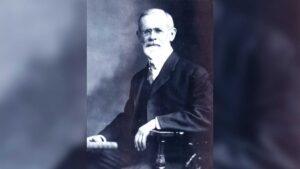
Cleveland Abbe worked in the U.S. Signal Service, a precursor to the National Weather Service, where he helped develop one of the first coordinated national weather forecasting systems.
Before this, weather predictions were inconsistent and largely localized. Abbe introduced standardized methods for collecting, analyzing and sharing weather data across regions. His work made it possible to issue more reliable forecasts and early warnings for storms and extreme weather, improving agriculture, transportation and safety for communities while reducing economic loss.
Rachel Carson: Making food and water safer to consume
(U.S. Fish and Wildlife Service, 1936-1952)
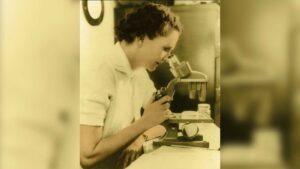
As a scientist at the U.S. Fish and Wildlife Service, Rachel Carson studied ecosystems and the impact of human activity on the environment. Her research and writing, particularly “Silent Spring,” a book that revealed the harmful effects of pesticides such as DDT on wildlife and humans. At a time when these chemicals were widely used in farming and even around homes, her work helped people better understand how everyday exposure could affect their health, food and water. Her work led to increased federal oversight of chemicals and helped reduce the use of harmful pesticides in the food people eat and the environments they live in.
William Foege: Helping to eradicate smallpox
(Centers for Disease Control and Prevention, 1977-1983)
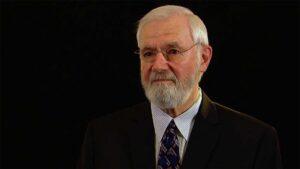
At the Centers for Disease Control and Prevention, epidemiologist William Foege helped develop a targeted vaccination strategy that became central to the global effort to eradicate smallpox.
Instead of attempting to vaccinate entire populations, he focused on identifying outbreaks and containing them by vaccinating those most at risk, a method known as “surveillance and containment.” This approach made it possible to use limited resources more effectively and respond quickly to emerging cases. It ultimately played a critical role in the elimination of smallpox in 1980, marking the first and only time a human infectious disease has been eradicated.
Foege’s work continues to shape how public health officials respond to outbreaks, from Ebola to COVID-19.
Thuc Hoang: Advancing National Security Through Innovation
(Department of Energy/National Nuclear Security Administration, 1995-Present)
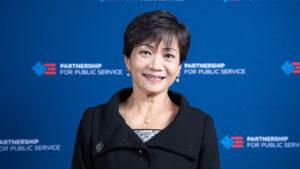
Thuc Hoang of the National Nuclear Security Administration led the development of El Capitan, the world’s most powerful supercomputer. This groundbreaking system enables highly advanced simulations to ensure the safety and reliability of the U.S. nuclear stockpile without live testing.
The supercomputer’s capabilities also extend to fields like climate modeling and scientific research, demonstrating how federal innovation can drive global progress.
Dr. Kizzmekia Corbett-Helaire: Advancing Vaccine Development
(National Institutes of Health, 2014-2021)

Kizzmekia Corbett-Helaire was part of a team at the National Institutes of Health that helped develop the mRNA technology behind one of the first COVID-19 vaccines.
This same mRNA technology is now being explored for other applications, including vaccines for different infectious diseases and treatment for certain cancers. Her work built on years of federally supported research into coronaviruses, and her contributions highlight how long-term investment in public science can enable quick responses to global crises.
Celebrate Public Service Recognition Week 2026
Public service rarely happens in the spotlight, but its impact is everywhere. From the systems that keep people safe to the research that drives innovation, these contributions shape how our country functions day to day.
As we mark Public Service Recognition Week, it’s worth recognizing the dedicated people who serve others and the role they continue to play in building a more effective government. Learn more about the Partnership’s efforts to celebrate public servants during Public Service Recognition Week.