
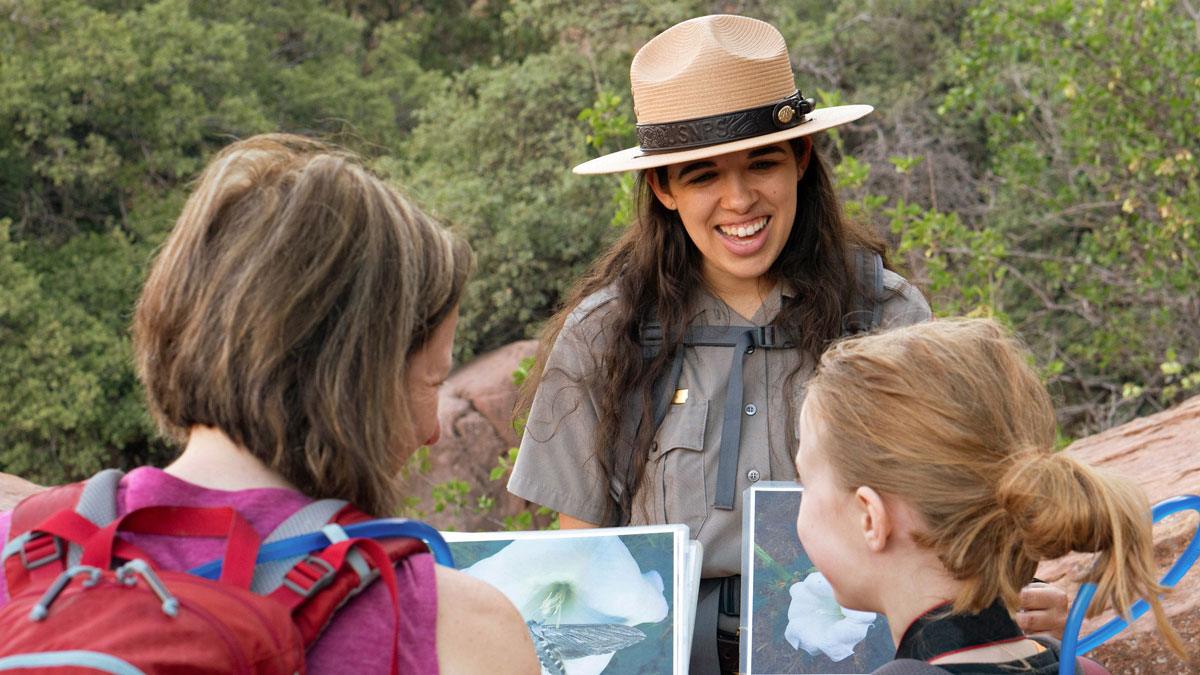
The United States is home to an extensive system of public lands and waterways, connecting communities in nearly every region of the country.
Approximately 27% of this terrain is overseen by federal park rangers and land managers who keep our national parks and recreation spaces safe, clean and welcoming for more than 330 million visitors every year.
The three public servants in this article, all former Service to America Medals® honorees, amassed decades of experience working in this capacity, each serving at an agency that has been dramatically affected by the Trump administration’s workforce cuts.
Under the second Trump administration, agencies that preserve national parks and public lands have seen a 27.4% decrease in the size of their federal workforce and a 30.4% decrease in their research and development contract funding, according to our research.
The work of the federal employees highlighted below underscores the public impact of these cuts, illustrating the types of vital, yet often unseen, projects that may be in jeopardy due to the administration’s actions.
3 public servants who have left a lasting impact on our public lands and natural history
Carol D. Shull: Chief of Heritage Education Services, National Park Service, 1972-2015
Through her more than 40 years of expanding the National Register of Historic Places, Carol D. Shull brought historic places to life for students, community members and others, ensuring that local history does not go unnoticed.
Through her Discover Our Shared Heritage travel itinerary series, she worked with partners worldwide to develop dozens of guides that shine a spotlight on historic places, enhance the visitor experience and offer communities a way to explore their own local history.
Without a listing on the register, many of these sites have no formal protection, risking these treasured places being lost from America’s story and history.
Surabhi Shah: Director, Urban Waters Program, Environmental Protection Agency, 2003-2026
Surabhi Shah combined federal and local partnerships to reverse heavily neglected waterways and surrounding lands. Through these partnerships, the Urban Waters Program has improved more than 22,000 acres of land, planted over 80,000 trees and engaged an estimated 100,000 community members.
The program is active in over 250 locations nationwide. People credit the program with building the first public park in an Atlanta, Georgia, neighborhood, with giving 400,000 residents access to canoeing and walking and biking trails in the South Bronx, and with bringing back a Grand Rapids, Michigan, river to boost tourism in the area, and more.
Leopoldo Miranda-Castro: Biologist, U.S. Fish and Wildlife Service, 1997-2022
Leopoldo Miranda-Castro took it upon himself to preserve some of America’s most diverse ecosystems in Puerto Rico and the Virgin Islands, territories that were excluded from the U.S. Fish and Wildlife Service’s Partners for Fish and Wildlife Program, until he expanded it.
Miranda-Castro has developed more than 60 partnerships with private landowners, restoring more than 2,000 acres of tropical habitat. These partnerships not only helped private landowners restore lands, but also became a beacon of trust between the federal government and Spanish- speaking U.S. territories.
Landowners in these areas are typically leery of the U.S. government, but Miranda-Castro worked to build their support and trust, including by translating all program materials from English to Spanish.
This July, we are celebrating National Parks and Recreation Month by highlighting past projects and public servants who have worked to maintain our public lands.
Visit servicetoamericamedals.org to read more stories, or explore our Cost of Cutting American Science tool to learn how recent cuts in federal science are affecting our national parks and public lands.
Author: Abigail Gioffre
Photo credit: National Park Service Gallery