
The latest review of federal spending and workforce data by the Partnership for Public Service shows that the Trump administration’s policies have led to the continued erosion of government support for states and communities, a decline in federal employment and fewer investments in science.
The updated information, available in detail on the Partnership’s Federal Harms Tracker data and storytelling website, reveals that federal assistance declined by $113 billion and federal contract obligations shrank by $85 billion from fiscal 2024 to fiscal 2026.
In addition, the tracker shows that the federal workforce as of August 2026 was 264,000 smaller than in September 2024. Federal investment in science was especially impacted by the workforce and funding cuts.
A closer look
Federal Assistance Declined Sharply in Fiscal 2026 Compared to 2024
The Cost to Your Community component of the Federal Harms Tracker, which records how the administration’s cuts to government have impacted states and communities nationwide, shows that federal assistance declined sharply in fiscal 2026 compared to 2024.
Federal funding given to state, local and tribal governments and organizations supports many different services that benefit Americans, from food banks to mental health care programs.The total value of federal formula grants, project grants and direct payments was $113 billion less in fiscal 2026 compared to fiscal 2024, a decline of 6.4%.
This decline is a notable reversal from fiscal 2025, which saw communities receive $52 billion more in federal assistance than in 2024. The decline in assistance was widespread, with 45 states and the District of Columbia receiving less from the federal government in fiscal 2026 than in 2024.
Workforce and Contract Losses are Widespread and Persistent
The updated Cost to Your Community data shows that federal employment and contracts, which both decreased significantly in 2025 due to the administration’s actions, remained below 2024 levels nationwide in 2026.
Decreased federal employment and the loss of federal contracting dollars harms the economies of impacted communities. Reductions in the federal workforce also weakens the government’s ability to effectively serve the public.
The value of federal contract obligations in fiscal 2026 was 14% less than in fiscal 2024, a loss of approximately $85 billion, and a continued decline from fiscal 2025. Forty-two states and the District of Columbia experienced net decreases in contract dollars since fiscal 2024.
Turning to federal employment, as of August 2026, the federal civil service was 264,000 employees smaller than in September 2024. These losses were spread across the country, with 49 states and the District of Columbia all seeing lower levels of federal employment.
Federal Support for American Science Continues to Shrink
The updated Cost of Cutting American Science, another component of the Federal Harms Tracker measuring federal investment in the sciences and employment at scientific agencies, indicates that federal financial investments in science declined after already significant losses in 2025.
Reduced federal scientific investment causes job losses in science-focused businesses and the surrounding community while also slowing the pace of American scientific innovation over the long-term.
In fiscal 2026, the value of project grant obligations was 56% less compared to fiscal 2024. This decline of over $84 billion impacted all scientific sectors.
Research and development contract obligations decreased by 23% in fiscal 2026 compared with fiscal 2024—a decline of over $3 billion. This decrease impacted all scientific research sectors except for food and agriculture.
The new data also shows that the federal scientific workforce remains significantly smaller than it was prior to the Trump administration. As of August 2026, employment at scientific agencies dropped by 13.4% compared to September 2024, a net loss of over 110,000 employees.
Conclusion
The update to the Federal Harms Tracker provides further evidence of the extent of the administration’s funding and workforce reductions, which continue to have a significant impact on the American public.
Author: Owen Haywood
Owen Haywood is an associate analyst who focuses on understanding government through data.
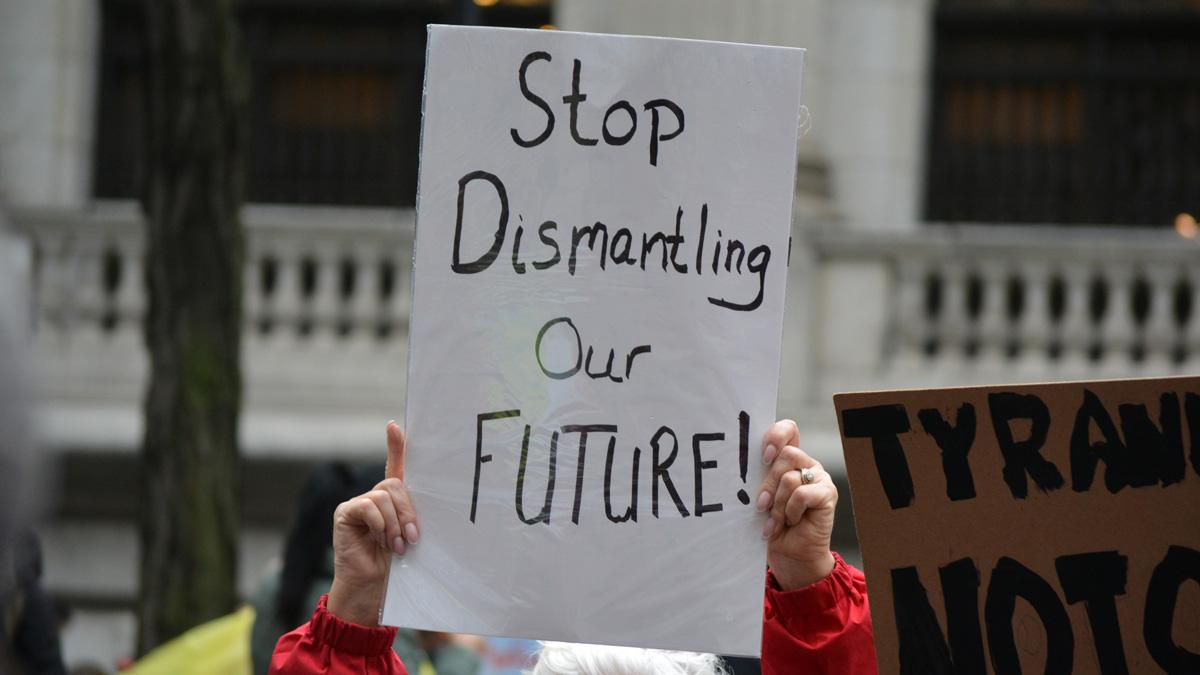
Featured image: Christopher Penler / Shutterstock.com. People march in Manhattan on April 5, 2025, during the nationwide Hands Off rally against the Trump administration and the Department of Government Efficiency.