
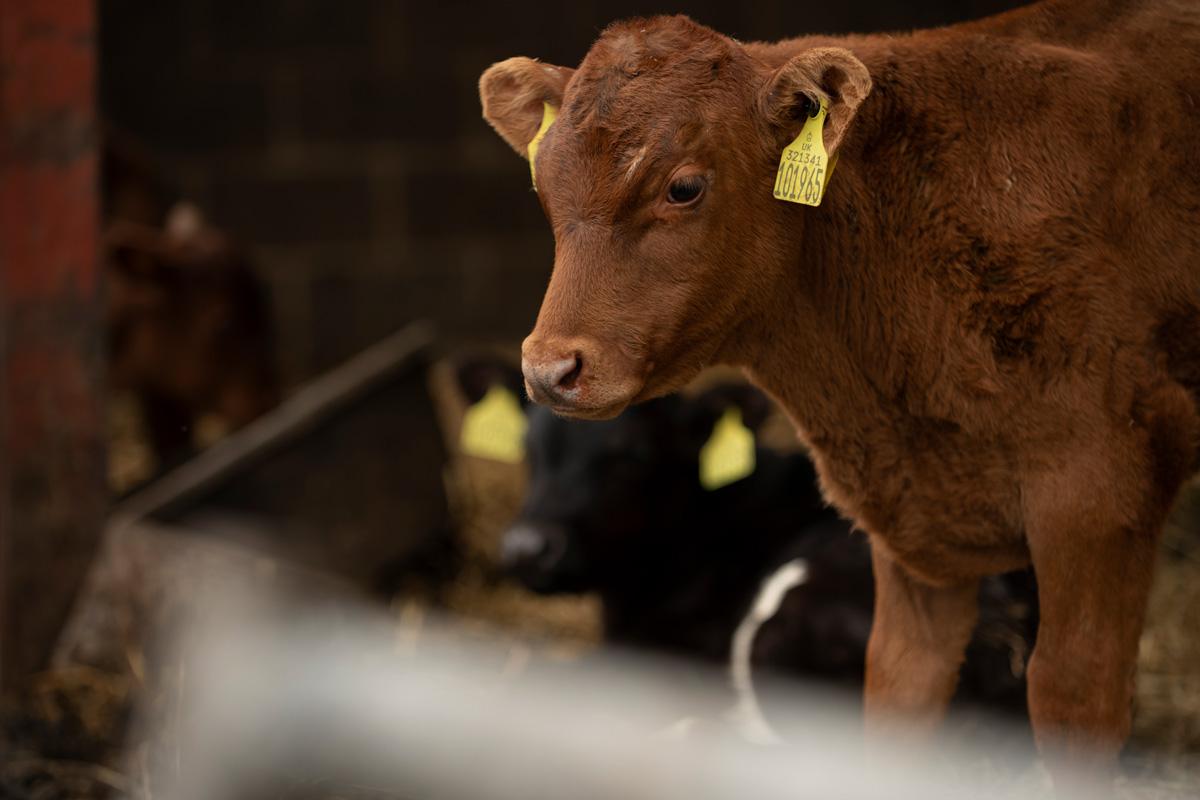
AUSTIN, Texas — When a three-week-old beef calf in Zavala County, Texas, was confirmed to have a New World screwworm infestation, it did not just mark the first endemic detection of a flesh-eating parasite in the United States in decades. It was a breach in a half century-old defensive line.
The active outbreak has since grown into dozens of confirmed cases across the region. While the crisis has quickly turned into standard partisan debates over border enforcement and regulatory rollbacks, industry experts argue that the true breakdown is far more systemic. The resurgence of the screwworm fly, scientifically known as Cochliomyia hominivorax, is the direct consequence of a breakdown in a quiet, decades-long effort to shape federal agricultural infrastructure.
For decades, the eradication of the screwworm was once considered a triumph of American governance. In the 1960s, the U. S. Department of Agriculture deployed the Sterile Insect Technique, releasing hundreds of millions of biologically altered flies to crash wild screwworm fly populations.
“We started with 200 million flies in ’62 to ’66, and that was when it was officially eradicated,” recalled Wayne Cockrell, second vice president of the Texas & Southwestern Cattle Raisers Association.
By mapping the pest’s migration, federal managers realized that the most effective way to safeguard the domestic multi-billion-dollar livestock market was to establish a permanent barrier at a tight chokepoint to halt the parasite’s northward march, and they chose a 60-mile-wide zone across the Isthmus of Panama.
“That’s the smallest avenue of land,” Cockrell said, “and that was why it was eradicated there the first time.”
The only other modern breach of this biosecurity wall occurred in September 2016, when a localized outbreak hit the Florida Keys, devastating the endangered Key deer population. But veterans of that experience point to that incident as a prime example of how a fully functioning federal apparatus is supposed to work. Because it was an isolated incident—likely introduced by a single smuggled pet rather than a failure of the Panama line—and confined to an archipelago, a robust federal workforce was able to choke it out instantly. The USDA’s Animal and Plant Health Inspection Service, or APHIS, and local agencies flooded the islands with personnel, established mandatory highway animal-inspection checkpoints, and successfully isolated the parasite before it could reach mainland livestock.
Today’s screwworm crisis, spreading across rural, open county lines in the American Southwest offers no such geographic safety net and a depleted federal workforce with fewer resources to contain it. The system worked so well in the decade following the Florida outbreak that modern cattle producers forgot the threat of living tissue being eaten from the inside out even existed. But behind that collective amnesia, federal fiscal choices were slowly dismantling that firewall.
Eradication is a pure numbers game; sterile flies must overwhelmingly outnumber wild flies. A massive facility in Tuxtla Gutiérrez, Mexico, capable of producing 500 million flies per week, fell victim to heavy federal budget cuts following the Great Recession. As the USDA slashed its screwworm funding by nearly 30%, the Mexico-United States Commission for the Eradication of Screwworms or COMEXA collapsed and the facility was permanently closed in 2012 before being handed over to Mexico where it was eventually scrapped entirely. That retreat left the entire North American continent dependent on a single production facility in Panama, leaving zero margin for error when the fly breached the barrier and began a steady march north.
“This particular threat had been contained, “ said Joe Maxwell, president of the Farm Action Fund. “Intervening in advance of coming into northern Mexico would have been a solid strategy.”
Instead, Washington has found itself playing catch-up. Agriculture Secretary Brooke Rollins insisted that the emergence of the flesh-eating pest “did not catch us off guard,” pointing to the rapid implementation of 20-kilometer movement restriction zones and accelerated border trapping protocols. She highlighted the administration’s expedited construction of a $600 million sterile fly breeding facility in South Texas as proof of an aggressive federal response.
But industry veterans say a massive building, which Cockrell notes is a highly complex level-3 biosafety facility roughly the size of “two and a half Costcos,” is useless without the staff to run it.
Because the parasite travels undetected for up to 170 miles inside invisible micro-wounds, like tick bites or cattle-tag punctures, on livestock and wildlife, finding it requires meticulous, localized biological data.
This is where recent federal workforce downsizing has had a direct impact. Personnel drawdowns initiated under the Department of Government Efficiency, or DOGE—which resulted in the reduction of roughly 1,300 APHIS personnel—sharply disrupted localized early-detection networks.
“The Trump administration, not just with the DOGE actions, but with this continuous disruption or dismantling of the USDA, has put themselves in a very vulnerable position,” Maxwell argued. He emphasized that the loss of veteran field operatives and county-level staff left the agency operationally blind.
“Not having personnel to set the traps, to capture, to follow. You don’t have the intel on the ground, the boots on the ground,” Maxwell said. “Then even though you have the sterile fly facility, you don’t have the folks that can help you understand where to deploy.”
This data blindness has sent shockwaves through other parts of the federal apparatus. Under Administrator Lee Zeldin, the Environmental Protection Agency, has accelerated the emergency approval of pesticides like Tanidil to bypass historical administrative backlogs. While that faster access is an important tool, circumventing normal oversight processes introduces distinct supply-chain risks. Experts say if a rushed product fails or taints the meat supply, the economic fallout could be catastrophic.
“We have to make sure that the products that are approved are safe, that there aren’t any residuals in the meat later on,” Cockrell stressed. He noted that a separate permethrin spray approved a year ago was discovered to be completely ineffective within 28 days. “We cannot lose our consumer confidence in our product.”
As the parasite spreads across Texas and into New Mexico, regional producers find themselves saddled with economic uncertainty at a moment when the domestic cattle herd already sits at a 75-year low due to historic droughts. Rebuilding the numbers takes massive financial investment, but ranchers aren’t willing to take the gamble while the federal response feels disorganized.
“A cattle producer has to develop the risk factors and cost of building back the herd,” Maxwell said. “There’s not a lot of information coming out that I think builds confidence.”
“You just don’t want to invest in rebuilding or building back up your herd. That’s the issue. Too much risk, too much uncertainty.”
Ultimately, the return of the screwworm demonstrates that constructing advanced facilities is only half the battle. Protecting a vital economic sector from a stealthy biological threat demands stable institutional memory, reliable field tracking networks and a permanent, specialized workforce. As the response in Texas continues, Maxwell points directly to the long-term consequences of eroding core federal resources.
“USDA is a huge department and is a very necessary [one] all the way from food safety to labeling to protecting America’s livestock producers,” Maxwell concluded, noting that the federal government retains the systemic capacity required to step up regional containment efforts: “They’ve got the vehicles, they’ve got the avenues… to take great further action than what they’re currently doing.”