
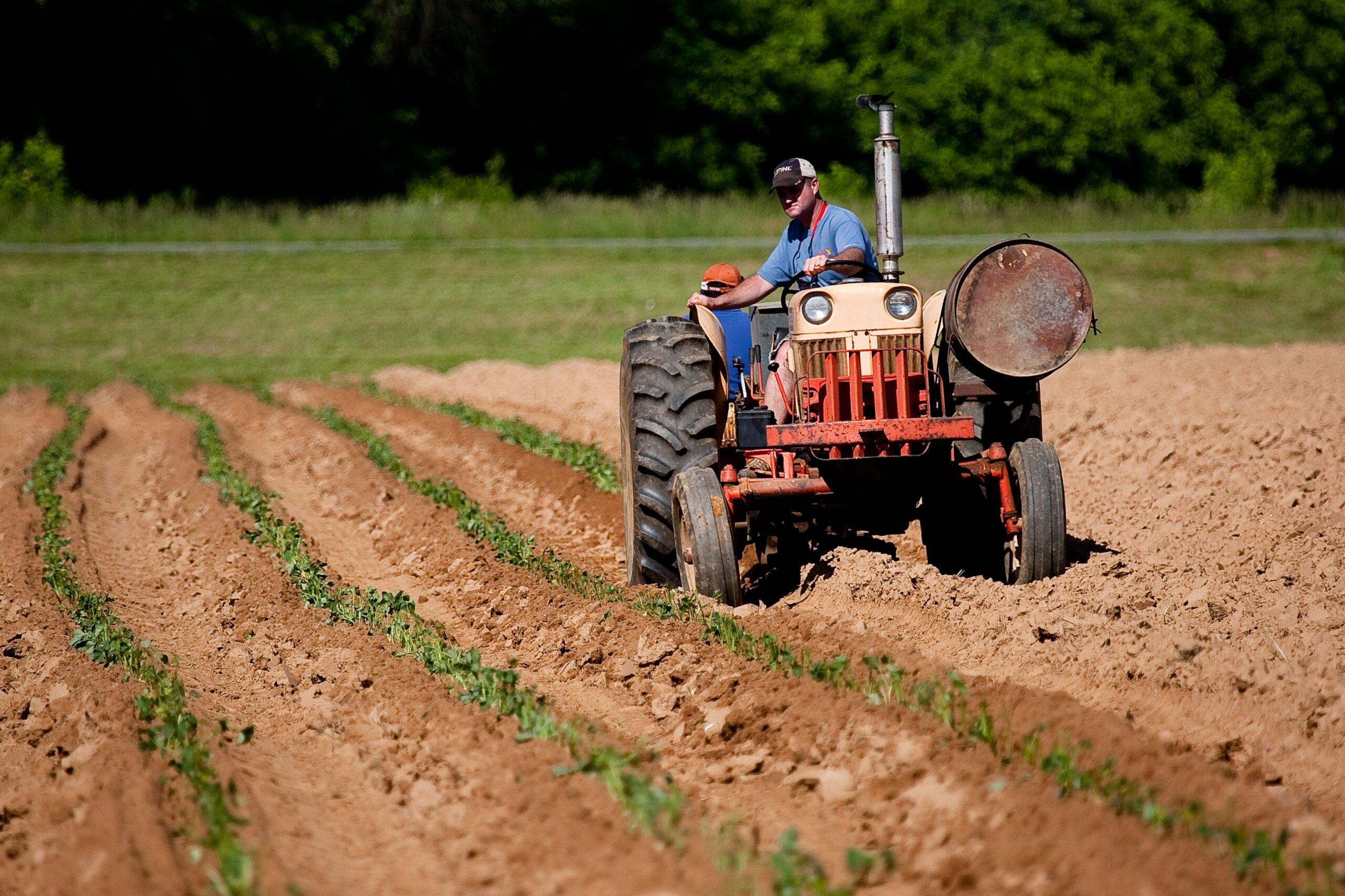
Across rural America, independent family farmers are facing a sudden, compounding crisis: federal grant-backed supply contracts canceled mid-season, regional buyers disappearing overnight and county agricultural offices gutted of career staff.
“These farmers had already started planting for the year,” said Veronica Jalomo, a farm-to-school coordinator with the Northwest Indiana Food Council, which saw $1.4 million in federal funds previously directed to 28 local family farms cut short by the March 2025 federal terminations.
“It really left the farmers with high supply and no buyers,” Jalomo said. “That pulling out of funding really felt like it undermined the long-term resilience of our regional food system.”
The sudden loss follows a series of administrative rollbacks and the Trump administration’s cost-cutting initiative, commonly referred to as DOGE, alongside executive reorganizations at the Department of Agriculture.
In March 2025, the Trump administration froze planned three-year funding extensions for key regional food procurement grants, declaring that the pandemic-era cooperative models—which had directed more than $1 billion into local supply chains—no longer aligned with agency goals.
The policy shift dismantled a growing, decentralized market model that independent producers had come to rely on.
The Genesis: Building Regional Safety Nets
To understand the severity of the current fallout, one must look at how regional agriculture adapted during the pandemic. When global supply chains froze in 2020, independent producers were cut off from commercial buyers like restaurants and schools. Highly perishable goods were routinely dumped into fields while grocery store shelves sat empty.
In response, the USDA drew on New Deal-era authorities in late 2021 to fund the Local Food Purchase Assistance and Local Food for Schools initiatives.
Instead of funneling money exclusively to large commercial operations, the programs authorized state, territorial and tribal entities to buy produce, meat and specialty goods directly from local family farms. The forward-looking contracts guaranteed institutional revenue before seeds were planted or livestock was processed, transforming emergency relief into a predictable business model for small and minority-led producers.
The Ground Impact: Broken Contracts and Rationed Pantries
When the Trump administration abruptly terminated those cooperative agreements in early 2025, the financial shock hit producers and community distributors mid-cycle.
“We had orders on the books that were supposed to come in that were canceled,” said Greta Faworski, associate director of Kalamazoo Loaves and Fishes in Michigan, which lost $300,000 worth of contracted local food after receiving $1.9 million through the program the previous year. “While we don’t know what we would have gotten the rest of the year, it’s a significant thing.”
“No private foundation, individual, or corporate foundation can replace the support of the federal government,” Faworski said.
In Maine, where the Good Shepherd Food Bank lost $1.25 million in regional procurement funding, crops were already in the ground.
“It was extremely challenging for many of the farmers that we work with,” said Robin McCarthy, Good Shepherd’s chief advancement officer. “It costs us some trust and stability… for farmers who are already navigating so much uncertainty because their work is completely dependent on what’s happening in our weather system and our climate.”
McCarthy noted that Good Shepherd subsequently suffered a 35% drop in federal emergency food assistance—a loss of 4.5 million pounds of food—forcing regional pantries to restrict operating hours and ration supplies through ZIP code verifications.
School cafeterias felt the immediate strain of lost farm funding. In Indiana, Brown County High School saw the end of the federal funding that powered a popular smash burger feature which had nearly doubled student lunch participation on days it was offered. The Lafayette School Corporation also lost the grants that provided a steady supply of local Fischer Farms meat and Eisele Farm honey at no cost.
In Wyoming—where regional advocates say less than 10% of raised beef remains in-state due to a shortage of processing infrastructure—federal grants had subsidized local processing and distribution.
“If they have reliable income, they’re able to plan that much better for their own future and to continue growing their crop,” said Ally Reeder, executive director of the Wyoming Food Coalition.
Workforce Reductions and Office Bottlenecks
Compounding procurement cuts, agency workforce reductions have affected the face-to-face support rural communities historically relied upon. Following federal reductions in force and voluntary separations, the USDA reduced its career staff by over 20,000 employees between January 2025 and January 2026, stripping county Farm Service Agency and Natural Resources Conservation Service offices down to skeleton crews.
“It adds more work for those people that are left in those offices,” said Nick Levendofsky, executive director of the Kansas Farmers Union. “They just don’t have enough people to deal with the load of work.”
The resulting backlogs force producers to travel extended distances to county seats just to process credit or conservation paperwork, leading many older farmers to abandon cost-share land stewardship programs entirely.
“Now all of our farmers are consistently confined by a lot of outdated legislation that doesn’t adequately fit the needs of farmers today,” Reeder said, noting that Congress has operated under short-term extensions of the 2018 Farm Bill. “Cuts from these federal programs are just one of many ways that it feels like we’re turning away from supporting our local producers.”
What Farmers Really Need: Market Security Over Cash Checks
In late 2025, the Trump administration announced a $12 billion Farmer Bridge Assistance package to cushion trade disruptions. However, the package largely provides direct payments to farmers based on the size of their farms, which policy experts say fails to address the underlying infrastructure crisis.
Agricultural policy analysts emphasize that a direct payment check cannot rebuild a local processing plant, reinstate a school lunch contract or staff a county office.
“The big issue that all farmers want to see from the government is they need their markets back,” Levendofsky said. “They don’t necessarily want a check from the government. They want a free and fair market that pays a fair price for what they grow.”
Author: Edith Mwangi, journalism and communications fellow at the Partnership for Public Service