
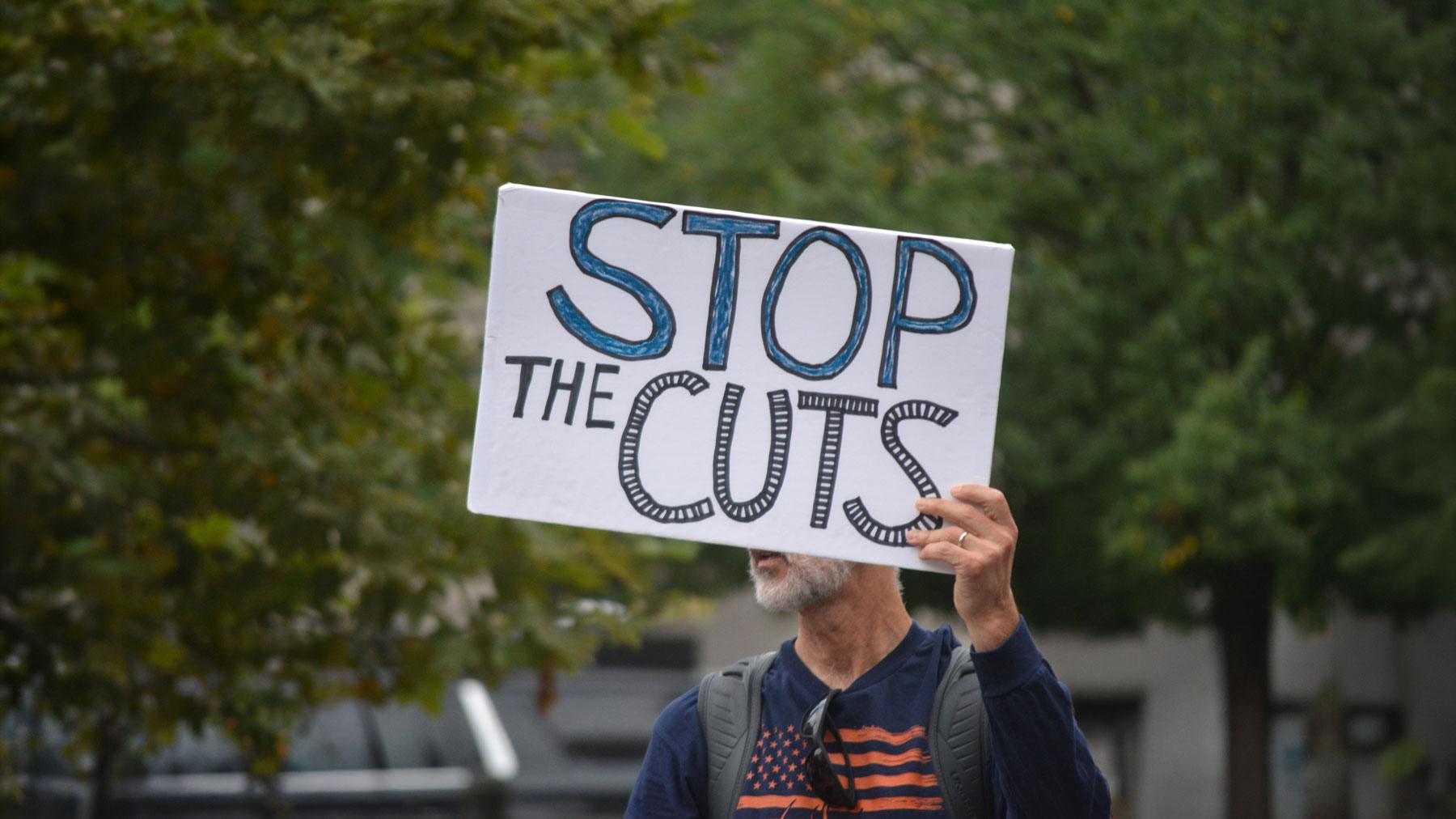
A 75% reduction. That’s how much one Centers for Disease Control-funded center in Denver, Colorado, was able to decrease violent youth crime arrests after only four years of research. But after the Trump administration took office, the center’s funding was suddenly and unexpectedly cut.
This past year and a half we have seen a similar pattern of the administration cutting promising, evidence-based programs across America without warning or cause. When these programs get cut and vital resources and funding are taken away, communities like yours suffer the consequences.
Upending stability
In Kalamazoo, Michigan, a report released in October 2025 by YWCA Kalamazoo stated that over 110,000 individuals were at risk of losing essential services because of federal funding cuts, including over $51 million in federal grants for Kalamazoo-area nonprofits.
These services include rental assistance, meals from food pantries, legal support and mental health care, among others. When access to services like these are cut, communities become less safe and healthy.
At a Veterans Affairs hospital in Pittsburgh, Pennsylvania, a federally imposed hiring freeze didn’t just affect talent recruitment—it meant that a new clinical drug trial aimed at treating advanced cancers of the mouth, throat and voice box was suddenly on hold because a key staff member’s contract couldn’t be renewed. Despite all the work that had been done to get the scientific side of the trial ready, without the clinical research coordinator, people could not receive the medication.
Why federal employees matter
The federal government has lost more than 400,000 employees since January 2025.
Government workers have roles that defy the image of an administrative bureaucrat. They are scientists, engineers and public servants who administer key programs that support Americans. They oversee federal grant budgets to diligently review and allocate funding to invest in communities through universities, private companies, research institutions and nonprofits.
Without federal employees, such as Department of Agriculture staff to support farmers or National Institutes of Health workers to process funding for medical research at universities, progress stalls.
In Arizona, local leaders are worried about an increased risk of deadly wildfires after a combination of funding cuts and hiring freezes made prepping for wildfire season much more difficult. Wildfire mitigation programs like prescribed burns and vegetation thinning require staff, and cuts to the U.S. Forest Service limited its ability to perform these duties.
Why you likely won’t see any savings
None of these stories are anomalies. They are the effects of the haphazard approach taken under the guise of saving Americans money.
In a survey performed in April 2026 by the Partnership, 76% of supporters of the Trump administration’s cuts to government say the administration has created “a lot” or “some” savings for the American taxpayer. However, the cuts have actually cost every American taxpayer an estimated average of $1,028.74, according to our Cost to Our Economy tracker.
Additionally, presidential cuts to federal budgets do not result in reduced taxes for Americans—only Congress can make that change. So, taxpayers will continue to pay the same amount, even as programs that support their communities get cut.
For example, take Plano, Texas, where a food bank serving 12 counties lost $2.5 million in already-awarded federal funds in 2025 and is expected to lose $9.2 million in 2026. Funding cuts in the name of savings are costing Americans who need essential services the most, burdening state budgets and communities to fill the gap.
In short, these “savings” do not put more money in our pockets, and the same needs still exist, even as the funding disappears.
The cuts in your backyard
Whether you’re worried about disaster relief, biomedical research, public land preservation or the loss of public radio stations, you can find a story that speaks to you on our interactive Cost to Your Community map.
All you have to do is enter your zip code, and it will take you right to a story that demonstrates the impact in your community. We invite you to explore the data, read the stories, contact your members of Congress and share this map with your networks, neighbors and loved ones.