

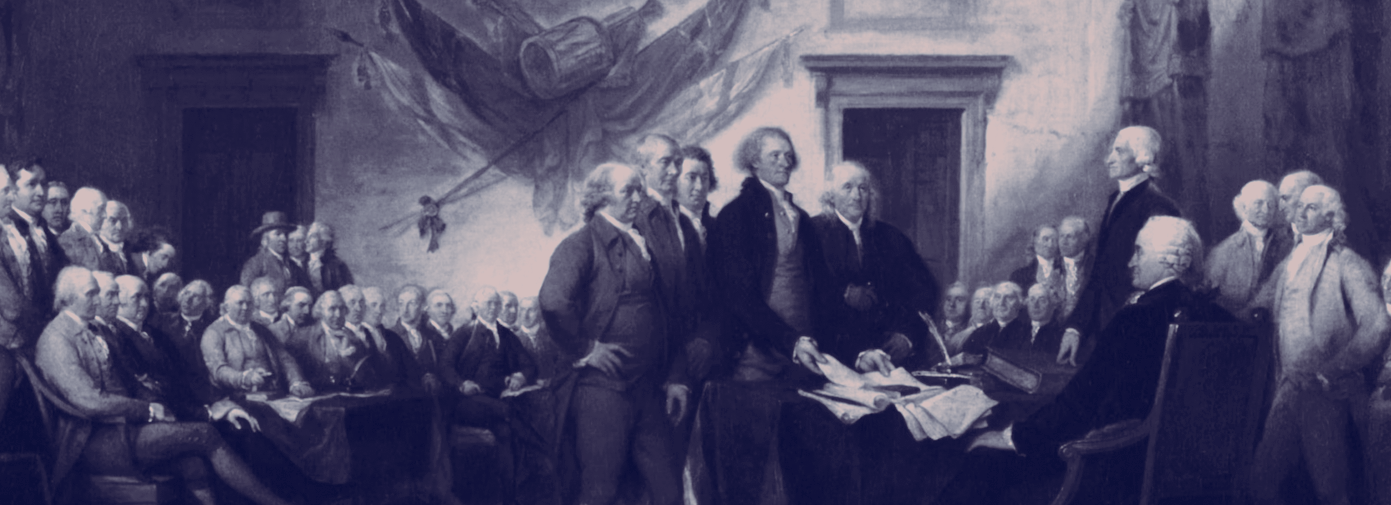
In 1776, a group of individuals came together to establish a government built to represent and serve its people. Today, we have a similar opportunity: not to start over but to reimagine and renew that vision by building a government that reflects everything our nation has learned since its founding and meets the evolving needs of its citizenry.
This occasion also comes at a time of great disruption within the federal government and contention over its role and purpose. Over the past year and a half, the Trump administration has made sweeping reductions to the civil service and unilaterally cut grants and programs across government. It has also taken steps to increase presidential control over the civil service, federal boards and commissions, and independent agencies.
In the wake of this reshaping of government and following decades of low public trust, the time is ripe for a renewed conversation about government’s role and responsibilities to the people it serves.
In a recent online survey conducted by the Partnership for Public Service, 40% of respondents say the 250th anniversary of the United States is a moment for reflection on the country’s progress and areas for improvement, 25% say that it is a major holiday for shared national celebration, 17% see it as a reminder of the ways the country has fallen short and 9% believe it can be a way to inspire civic participation. Only 10% say that it is not meaningful to them.
To mark this moment of celebration and reflection, the Partnership conducted quantitative and qualitative research to better understand how members of the public think the federal government should change to better meet their needs. We also sought to gain insight into what the public is willing to do to change or improve the federal government. Through analysis of online surveys, social media engagements and a publicly available online form, we found six priorities for reimagining a better government. Our findings also indicate a public willingness to participate in creating a more effective government in the future.
Six priorities for better government

A government that understands and is responsive to the average American’s needs.

A government that serves the public good over money, corporations or special interests.
A government that effectively identifies and works to solve the country’s greatest problems.

A government in which leaders work together regardless of politics.

A government that is representative of the average American.
A government that is effective and efficient.
The public’s priorities for better government

As we mark the nation’s 250th anniversary, the American public is largely dissatisfied with the federal government. Trust in government has dropped dramatically over the past 60 years and a May 2026 survey found that 71% of Americans believe our political system either needs major changes or needs to be torn down completely.
This deep discontent combined with a momentous occasion presents an opportunity to consider how government can evolve into an institution that addresses these concerns and serves the public more effectively.
To answer this question, the Partnership solicited input from Americans across the country, representing a diverse group of political views, locations, ages and races. We asked them to share with us what a better government would look like and how it would behave. Their responses were instructive. While we asked respondents to offer their ideas for how the government could improve, many respondents expressed their current frustrations. We also asked respondents to consider the elements of government beyond politics and political leaders, but as we found in previous Partnership research, many Americans think first of politics and Congress when they think of government. Accordingly, many responses focused on the current political environment and elected officials. However, in the analysis of these responses, six priorities emerged for how the public is thinking about the current state of our government and how it needs to change.
The following sections identify those six priorities and provide a starting point for how we can reimagine a government that better serves the American public in the future.
What we heard from members of the public
 “A government that works for what is best for ALL Americans.” “One that I trust to put the needs of the people first.” “One that listens to people’s concerns.” “Is always open to and searching for ways to improve serving the people of the United States.” “[One that] responds to what the general public is asking them to do.” “A government that listens to the people and can identify areas where the average citizen struggles the most and helps aid in that area so that every American citizen is living the best life they can.”
What we heard from members of the public
“There was no more big money. No Citizens United, no stock trading, no corporate lobbying. Elected officials are public servants, they should not be slaves to big money.” “Lobbyists, shell think tanks and corporations were limited in their influence in government and with the amount of money they were allowed to pour in.” “It wasn’t dictated by those with the most money.” “If it wasn’t corrupted by corporate money and partisan politics.” “Corporations are not allowed to use their money to run policies.”What we heard from members of the public
It’s 2050 and the government finally….
“Uses taxation for the good of ordinary people, providing universal single payer health care, high-quality public education, environmental protections, maintenance of public lands for a variety of recreational activities, efficient public transportation for and between both urban and rural communities.” “It invested in public goods like healthcare, education, clean energy and fair wages so everyone, not just the well connected, could thrive.” “It used my tax dollars to benefit me… better education, infrastructure, services.” “A government that meets my needs is solving things that will be worse problems later.” “If there were actual incentives to solve problems instead of perform for optics.” “[We had] representatives who prioritize practical solutions to real problems and work to fix the systems that are broken before turning their focus to niche issues.” “One that is able to budget properly and provide proper services such as good roads, public schools, public transportation, wider availability of food to those in need, universal healthcare, etc.”What we heard from members of the public
“Leaders put people above party and focused on everyday needs.” “There [is not] perpetual gridlock on basic ideas.” “If leaders would stop partisanship and think about people instead.” “Both sides could have adult discussions without vitriol and accusations. Most Americans want similar things and I believe we agree on much more than we don’t.” “Our leaders were better able to work with the other end of the political spectrum and compromise for the good of the citizens.” “Focus on nonpartisan cooperation would go a long way in solving real-world problems for everyday citizens.” What we heard from members of the public
Government would work better if…
“The majority of leaders weren’t decades older than the average American.” “Truly representative of ALL Americans, including Independent voters.” “Representative of the melting pot that is the USA.” “Working for everyone no matter their political preference or economic standing.” “Has a variety of civil servants from all races, ages, genders and backgrounds.” “Has become a government of all the people despite differences in race, religion, gender and financial status.” What we heard from members of the public
Government would work better if…
“It embraced modern technology to speed up public services and cut down on red tape.” “If services were faster, more transparent, accountable, efficient, and responsive to citizen’s needs.” “It were more efficient, transparent and responsive to people’s everyday needs. Improving communication with the public, reducing unnecessary delays and bureaucracy, and ensuring services are delivered quickly and fairly would help build greater trust.” “If there was an emphasis on solving problems effectively.” “People who call agencies asking for help got the help they needed quickly.”How Americans are engaging with their government
 For our government to achieve the priorities defined by the public, it will require that individuals, communities, elected leaders and public servants all work together to build a better government.
There are many ways that the public can influence and change our government and democracy. While a lot of attention is appropriately focused on voting, Americans can engage in other ways such as contacting public officials, attending protests, donating to campaigns and discussing the issues that matter to them with their friends and family. To get a sense of how Americans are currently engaging with the government, the Partnership conducted an online survey of 1,000 U.S. adults.
The vast majority of people—93%—say they have talked to their friends and family about ways to improve the government in the past year. Fully 69% of respondents say they voted during that time. More than half said they have donated to a charity or political campaign, posted on social media or engaged with a community organization.
We also wanted to learn about factors that are keeping people from participating more in the improvement of the government. The largest response was that people feel as though their actions would not make a difference. About half (52%) of participants say that was a major reason for not engaging with their government.
Thirty-eight percent say that distrust of organizations or leaders was a major reason, while 31% say they feared negative personal consequences if they took more action. For the priorities identified in this report to come to fruition, these barriers to participation will need to be addressed.